
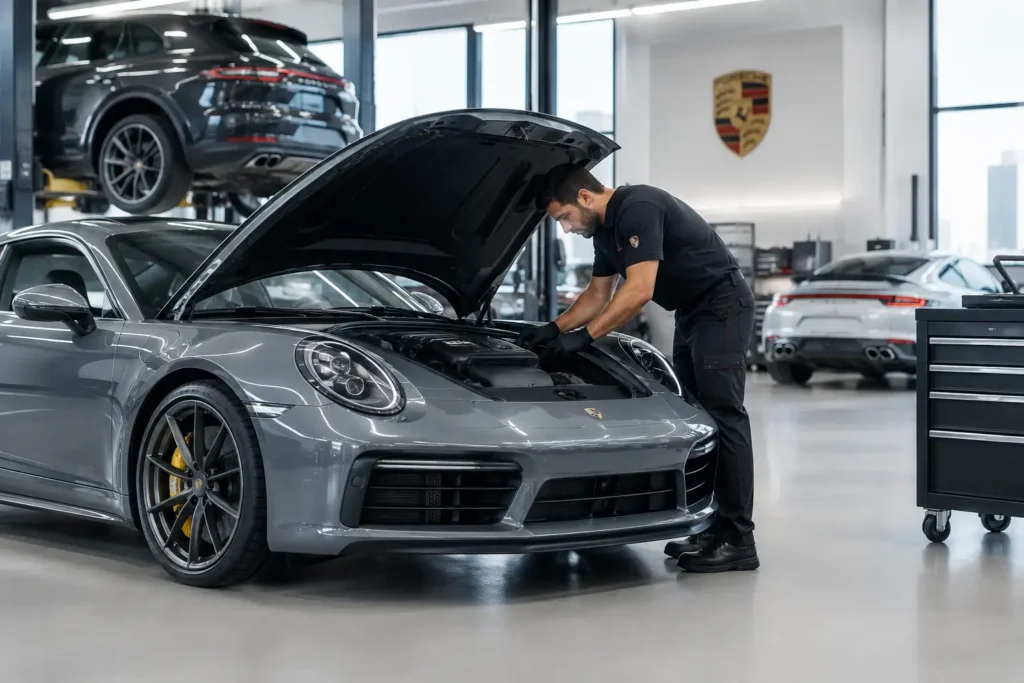
A Porsche rarely gives up its secrets through a single warning light. A small coolant loss, intermittent suspension message, rough cold start, or delayed gear change can point to several systems at once. That is why choosing the right Porsche service center Dubai owners rely on is about more than finding a workshop that can complete an oil change. It is about putting a precision-engineered vehicle in the hands of technicians who can identify the real cause, explain the repair clearly, and protect the way the car drives.
Dubai places unique demands on high-performance vehicles. Extreme heat, heavy stop-start traffic, short journeys, and long highway runs can accelerate wear on fluids, cooling systems, brakes, tires, batteries, and air-conditioning components. A well-maintained Porsche should feel composed and immediate, whether it is a Cayenne used every day, a Macan carrying the family, a Panamera covering business miles, or a 911 driven for the pure enjoyment of it.
What a Porsche Service Center in Dubai Should Deliver
The badge on the hood is only one part of the service decision. Porsche models combine advanced electronics, turbocharged and naturally aspirated engines, dual-clutch transmissions, adaptive chassis technology, and sophisticated safety systems. Servicing them correctly calls for a workshop with proper diagnostic capability, brand knowledge, and a disciplined process.
A specialist should begin with an accurate assessment rather than assumptions. Modern fault codes are useful, but they are not a diagnosis by themselves. A code may identify an affected circuit or a system operating outside its expected range. The real work is tracing the issue through live data, wiring checks, pressure tests, component inspection, and a road test where appropriate.
This matters particularly for intermittent concerns. An occasional check-engine light, a PCM-related electrical issue, or a warning that appears only after the vehicle has been parked in the heat can be easy to dismiss. Replacing parts without testing may temporarily hide the symptom while increasing the final bill. Careful diagnostics save time and help avoid unnecessary work.
Routine Care That Protects Performance
Routine maintenance is the foundation of Porsche ownership, not a formality to postpone. Engine oil, filters, brake fluid, coolant condition, gearbox service intervals, and spark plugs all influence reliability and driving quality. The correct schedule depends on the model, mileage, age, driving pattern, and prior maintenance history.
For example, a vehicle that spends much of its life in city traffic may need more attention than one that covers steady highway mileage, even when both have similar odometer readings. Frequent short trips can leave moisture and contaminants in the oil, while sustained high temperatures place extra demand on the cooling system and air-conditioning. A performance-focused service center will assess how the car is actually used instead of applying a one-size-fits-all approach.
Approved lubricants and filters are equally important. Porsche engines and transmissions are built to tight tolerances, and using the correct specification helps preserve smooth operation, temperature control, and long-term component life. OEM or high-quality equivalent components should be selected based on the repair, the vehicle specification, and the owner’s priorities. The lowest-priced part is not always the best value when access is labor-intensive or when the component affects safety and reliability.
Diagnostics Need More Than a Generic Scan Tool
A generic scanner may read basic engine faults, but it cannot replace Porsche-capable diagnostic equipment and experienced interpretation. The vehicle’s modules communicate across multiple networks, covering powertrain operation, braking, steering, suspension, comfort functions, driver assistance features, and infotainment.
A proper diagnostic process considers stored faults, freeze-frame information, live sensor values, service history, battery condition, software-related behavior, and physical inspection. This is especially valuable on vehicles with complex systems such as PDK transmission control, PASM suspension, air suspension, electronic steering, turbocharger control, and advanced climate control.
Battery and charging faults deserve particular attention. Low voltage can create a chain of unrelated-looking warning messages in a modern Porsche. Before replacing expensive modules, a technician should verify battery health, charging output, connections, and parasitic draw where needed. The methodical approach may take longer than simply clearing codes, but it produces a result that can be trusted.
Brakes, Tires, and Suspension Are Safety Systems
Porsche braking systems are engineered for confident, repeatable stopping power. That performance depends on more than brake pad thickness. Rotor condition, pad compound, caliper operation, brake fluid age, brake lines, electronic wear sensors, and correct bedding procedures all deserve attention.
A steering vibration, brake pedal pulsation, pulling under braking, or squeal should be inspected early. Sometimes the solution is straightforward. Other cases involve uneven rotor deposits, worn control-arm bushings, wheel balance, tire condition, or a sticking caliper. Accurate diagnosis prevents an owner from paying for brakes when the underlying issue sits elsewhere.
Suspension work should also be carried out with the vehicle’s driving character in mind. Worn bushings, leaking dampers, faulty air-suspension components, or incorrect wheel alignment can make a Porsche feel unsettled long before the problem appears dramatic. After relevant suspension or steering repairs, precise alignment helps protect tire life and restores the confidence the chassis was designed to deliver.
Cooling and Air-Conditioning Cannot Be Treated as Minor Repairs
In Dubai, cooling-system and air-conditioning performance are essential. Any rise in engine temperature, coolant smell, visible leak, weak cabin cooling, or unusual fan noise should be checked promptly. Continuing to drive with a cooling fault can turn a manageable hose, pump, radiator, or thermostat repair into a much more serious engine issue.
Air-conditioning diagnosis should go beyond adding refrigerant. A capable workshop will look for leaks, verify pressures, assess compressor performance, inspect the condenser and cabin filter, and confirm that vents are delivering consistent cooling. On a premium vehicle, cabin comfort is part of the ownership experience, but a healthy climate system also reduces strain on other components in high ambient temperatures.
Transparent Advice Makes Better Ownership Decisions
A quality independent Porsche workshop should explain what is urgent, what is recommended soon, and what can be monitored. These categories matter. A brake fluid service or active coolant leak may require immediate action, while an aging bushing with no adverse handling symptoms may be planned around the next service visit.
Ask for a clear estimate before work begins and request an explanation when a repair recommendation is complex. Good technicians are comfortable showing worn components, sharing relevant diagnostic findings, and discussing the benefits and trade-offs of the available options. This is not about overloading an owner with technical language. It is about making the decision understandable.
AM Motor Works applies this practical approach to Porsche maintenance, repairs, fault finding, and performance-focused work. The aim is straightforward: use experienced technicians, modern diagnostics, approved fluids, and quality parts while keeping the owner informed from inspection through completion.
When Performance Upgrades Need Specialist Care
A carefully chosen performance upgrade can make a Porsche more responsive and enjoyable, but modifications should never compromise reliability or daily usability. Software tuning, exhaust work, intake changes, brake upgrades, and suspension modifications need to suit the specific engine, drivetrain, model year, and intended use.
The best option depends on the vehicle. A daily-driven Cayenne or Macan may benefit most from calibrated, conservative improvements that retain smooth drivability and thermal control. A weekend 911 may have different priorities. Before modifying any Porsche, establish a healthy mechanical baseline. There is little value in adding power to a car with unresolved boost leaks, weak ignition components, cooling concerns, or transmission faults.
A reputable workshop will be candid about those limitations. More power can increase heat, stress, fuel requirements, and maintenance needs. Honest advice is often the difference between an upgrade that feels engineered and one that creates a series of avoidable repairs.
Choose the Workshop, Not Just the Service Price
The right Porsche service center is one that treats routine maintenance with the same care as a complex electrical fault or engine repair. Look for brand-specific knowledge, diagnostic depth, quality components, realistic estimates, and direct communication. Price matters, but the lowest estimate can become expensive if the repair is based on guesswork or inferior parts.
Bring the car in when a small symptom first appears, keep service records organized, and give the technician a clear description of when the issue occurs. That information can shorten diagnosis significantly. More importantly, it helps preserve the precise, confident driving experience that made you choose a Porsche in the first place.