
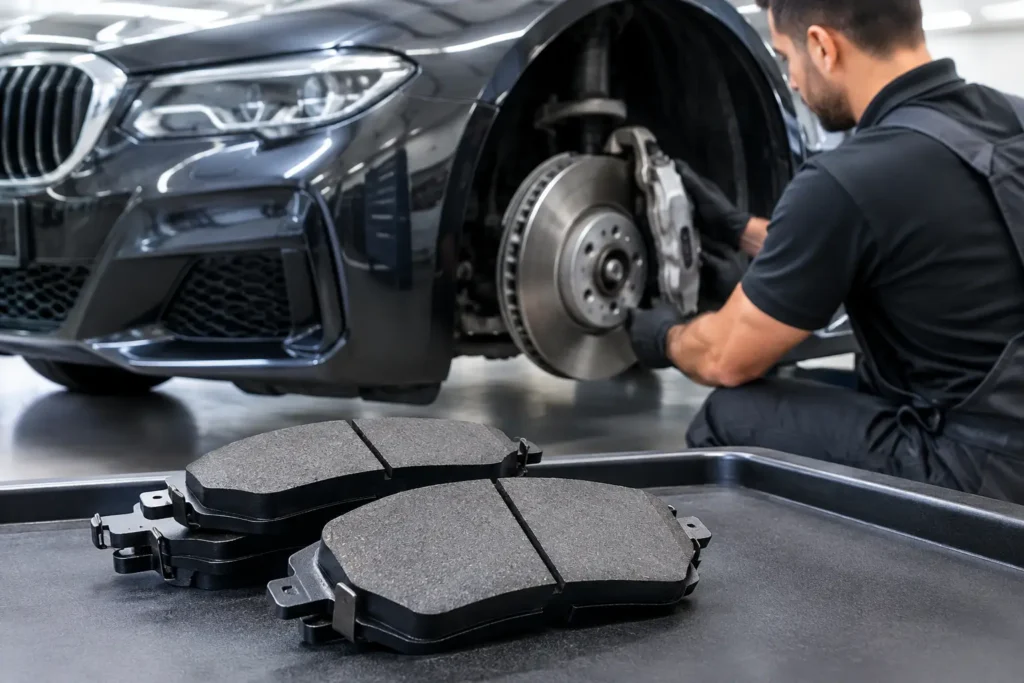
A brake warning light is not the first sign your pads are worn. On many premium vehicles, the clues arrive earlier: a faint squeal at low speed, a longer pedal travel, vibration through the steering wheel, or brake dust building up faster than usual. For brake pad replacement Dubai drivers can trust, the goal is not simply to fit new friction material. It is to inspect the complete braking system and restore the precise, confident feel your vehicle was engineered to deliver.
Luxury, European, exotic, and performance vehicles place greater demands on their braking systems. Their pads, rotors, sensors, calipers, and electronic brake functions must work together accurately. A rushed replacement or incorrect parts choice can lead to noise, uneven wear, reduced braking performance, or dashboard warnings that should never have appeared.
When Do Brake Pads Need Replacement?
Brake pad life depends on the vehicle, driving style, traffic conditions, and the type of pad installed. A BMW driven daily through heavy city traffic may need front pads sooner than the same model used mainly for highway journeys. A Porsche, Mercedes-Benz AMG, Audi S or RS model, Lamborghini, or other high-performance vehicle may wear pads more quickly when driven enthusiastically, even if its mileage is relatively low.
The most common signs are straightforward. Squealing or scraping during braking, a brake wear warning on the instrument cluster, reduced stopping confidence, a soft pedal, or vibration under braking all deserve professional attention. Do not assume every noise means the pads are at fault, however. A stone caught near the backing plate, glazed pad surfaces, rotor wear, caliper issues, or incorrect previous installation can produce similar symptoms.
If you hear a harsh metal-on-metal grinding sound, stop driving as soon as it is safe to do so. This can mean the friction material has worn away and the pad backing plate is contacting the rotor. At that stage, what may have been a pad service can become a more costly rotor and caliper repair.
Brake Pad Replacement Dubai: Why the Full Inspection Matters
A correct brake service starts before any parts are removed. The technician should measure pad thickness, assess rotor condition, check for uneven wear, inspect caliper operation, and review brake fluid condition where appropriate. On modern vehicles, the workshop may also need to read fault codes, reset brake service indicators, or place an electronic parking brake into service mode using brand-specific diagnostic equipment.
Rotors deserve particular attention. Some can remain in service if they are smooth, within the manufacturer’s minimum thickness specification, and wearing evenly. Others should be replaced with the pads. Fitting new pads onto heavily scored, heat-spotted, warped, or undersized rotors can compromise the bedding-in process and leave the driver with vibration or noise soon afterward.
The answer is not always to replace every component automatically. It depends on measured rotor thickness, surface condition, the vehicle manufacturer’s specifications, and how the car has been used. A transparent workshop should explain what has been found, show the condition of the relevant parts when practical, and provide a clear estimate before proceeding.
Pads and Rotors Work as a Matched System
Brake pads create friction, while rotors absorb and disperse the heat generated when the car slows down. On a heavy luxury SUV or a high-output sports sedan, that heat load can be substantial. If the pad compound is poorly matched to the rotor, the result may be excessive dust, squeal, accelerated wear, or an inconsistent pedal feel.
This is why part selection should be based on the exact vehicle specification, not only on dimensions. Brake systems can differ across engine variants, trim levels, production years, and performance packages. A vehicle identification number check and experienced parts sourcing help avoid an expensive mismatch.
Choosing OEM, Genuine, or Performance Brake Pads
For most premium vehicles used on the road, genuine OEM components or high-quality OEM-equivalent parts are the sensible choice. They are designed to meet the braking behavior, noise standards, and electronic compatibility expected by the manufacturer. Approved components also support predictable bedding-in and consistent performance in everyday Dubai traffic.
There are situations where a performance-focused pad may be appropriate. Owners who drive on track, run significant power upgrades, or regularly use their car in demanding mountain or spirited-road conditions may want a pad compound with greater fade resistance. That choice has trade-offs. More aggressive pads can produce more dust, more cold-start noise, increased rotor wear, and a less refined feel during normal commuting.
The best pad is therefore not always the most expensive or most aggressive option. It is the one that suits the car, its current braking hardware, and the way you genuinely drive it. A daily-driven Rolls-Royce needs a different brake-service conversation than a tuned BMW M car or a track-oriented Porsche.
What a Proper Brake Service Should Include
A professional brake pad replacement is more than removing worn pads and installing new ones. The caliper assembly should be inspected for leaks, sticking hardware, damaged boots, and uneven movement. The technician should clean and prepare relevant contact points using the correct products, while avoiding contamination of the pad friction surfaces and rotors.
Brake wear sensors should also be checked. Many European vehicles use sensors that must be replaced once triggered, while others can be reused if undamaged. Incorrect sensor handling can leave a warning message active after a brake service or create unnecessary fault codes.
After installation, the brake system should be reassembled to the manufacturer’s torque specifications. On vehicles with electronic parking brakes, brake-by-wire features, or advanced driver-assistance systems, correct service procedures matter even more. The vehicle should then be road-tested where appropriate, and the driver should receive clear bedding-in guidance.
At AM Motor Works, brake work is approached as a safety and performance service rather than a quick consumable-parts job. That means matching quality components to the vehicle, checking the condition of related hardware, and communicating any findings before additional work is carried out.
How Dubai Driving Affects Brake Wear
Dubai presents a mix of conditions that can shorten brake component life. Dense stop-and-go traffic, frequent short trips, high ambient temperatures, and hard braking from highway speeds all add heat to the system. Sand and dust can also contribute to noise or contamination around brake components, particularly when a vehicle is driven regularly in exposed areas.
Heat does not automatically damage brakes, but repeated high-temperature cycles can accelerate rotor wear and cause pad material to glaze. A glazed pad can become noisy or feel less effective because its surface has hardened. This is more likely if brakes are repeatedly used hard and then held under pressure while very hot, such as after a fast stop followed by sitting in traffic.
Driving technique can help. Leave more space in traffic, brake progressively rather than sharply whenever conditions allow, and avoid resting your left foot on the brake pedal. After a demanding drive, a short period of gentle driving can help the brakes cool more gradually.
Bedding In New Brake Pads
New pads need a controlled bedding-in period to transfer an even layer of friction material onto the rotor surface. The exact procedure varies by pad manufacturer and vehicle type, so follow the workshop’s recommendations. In general, avoid repeated emergency-style stops, unnecessary high-speed braking, and prolonged heavy brake use for the first few hundred miles.
You may notice a temporary smell during the first heat cycles, especially with certain pad compounds. That can be normal. Persistent burning smells, smoke, severe vibration, pulling to one side, or a warning light are not normal and should be checked promptly.
Brake service is one area where waiting for a complete failure is never worth the risk. If your vehicle is showing early wear symptoms or has reached its recommended inspection interval, book a proper assessment before a small consumable item turns into rotor damage or a compromised drive home.